


Last updated: August 2026. Reviewed by Maksim Grinvald, owner, Max Appliance Repair Sarasota.
When a washing machine smells like a musty gym bag or a whiff of sewer, the odor is not coming from your clothes. It is coming from a thin, living film of bacteria, mold, and detergent scum that builds up where water sits and never fully dries. In Sarasota, our year-round humidity keeps that film happy, which is why our Sarasota washer service team hears about smelly machines more here than almost anywhere.
The good news: most washer odors clear up with a deep clean you can do yourself, plus a couple of habits that keep them from coming back. Here is exactly where the smell hides, how to strip it out step by step, and when a lingering stink means something mechanical needs a closer look.
In this article
Where the smell actually comes from
A washer that smells is almost always dealing with one of three trapped-moisture problems. Front-load machines get the worst of it because their door seals a watertight cavity, but top-loaders are not immune.
- Biofilm buildup. Detergent, fabric softener, body oils, and lint feed a slimy layer of bacteria and mold that coats the drum, hoses, and detergent drawer. That biofilm is the classic musty smell.
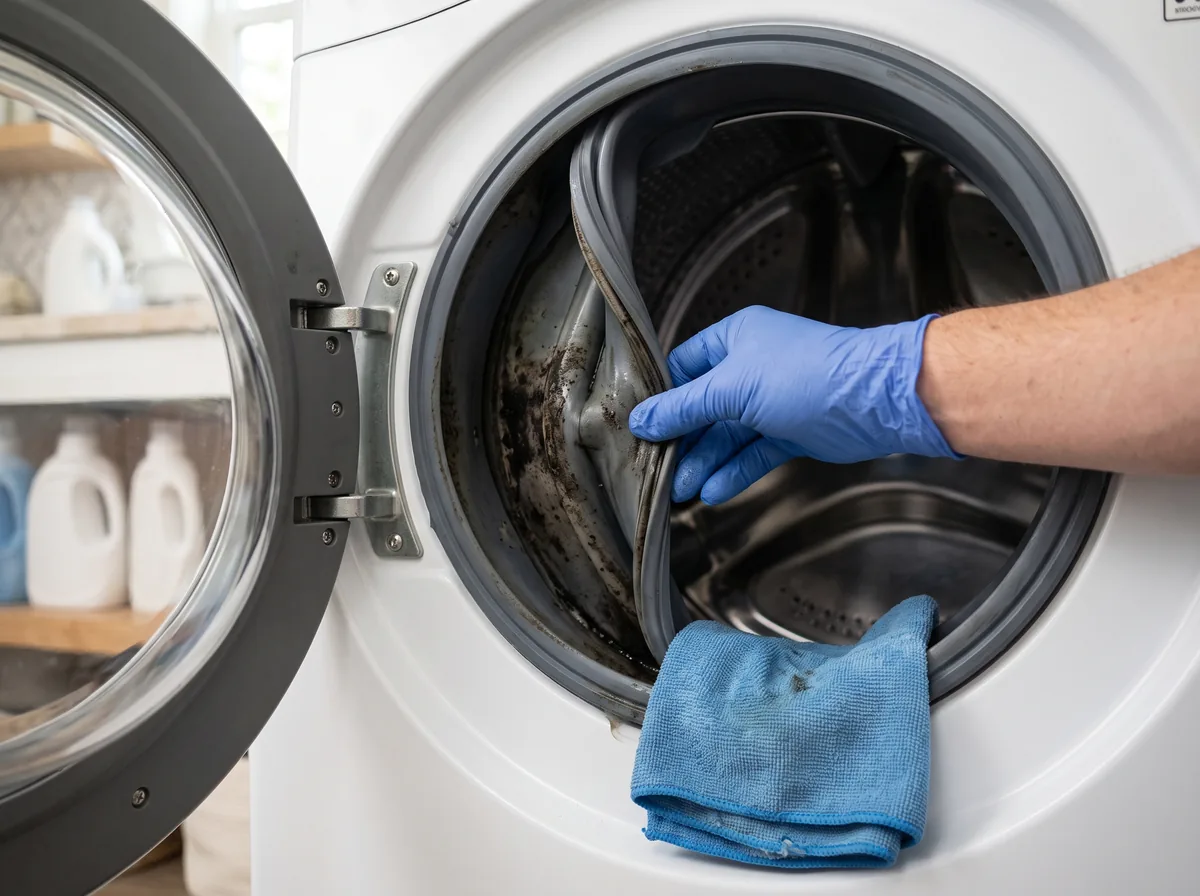
- The door gasket. On front-loaders, the rubber boot around the door has folds that trap water, hair, and gunk. Peel it back and you will often find black mold and a sour smell right there.
- Standing water. A clogged drain filter, a sagging drain hose, or a partly blocked pump leaves water pooling in the machine between loads, and stagnant water turns rank fast.
- If your washing machine smells, the cause is almost always trapped moisture, detergent residue, or mold hiding somewhere inside the appliance. Identifying where the odor starts makes it much easier to remove it completely.
Quick take
A musty or moldy smell usually means biofilm and a dirty door gasket. A sewer or rotten-egg smell points more often to standing water in the drain or trap. The fix starts with a deep clean, but the sewer smell can also mean a drainage issue worth checking.
Why Sarasota humidity makes it worse
Odor-causing bacteria and mold need three things: moisture, warmth, and food. A washer supplies the food. Sarasota supplies the other two almost all year. With average humidity sitting high from late spring through fall, a machine that never gets a chance to dry out becomes a small greenhouse for mold between loads.
A washer in a dry climate might air out on its own overnight. Here, a closed door on a front-loader traps warm, damp air against the gasket for hours, and that is prime mold territory. It is the same reason coastal laundry rooms and garages often smell mustier than the rest of the house. The humidity is not your fault, but it does mean Sarasota homes need to clean and dry their washers a little more deliberately than the manual assumes.
Did you know
Mold spores are everywhere in Florida air, so you cannot keep them out of a washer. What you can control is whether they find standing water to grow in. The EPA notes that indoor mold control comes down to moisture control, and a washer is one of the dampest spots in the house. Drying it out is the whole game.
How to deep clean a smelly washer
If your washing machine smells, this deep-cleaning routine strips out biofilm, removes odor-causing buildup, and helps keep the smell from returning. Set aside about an hour, most of it hands-off:
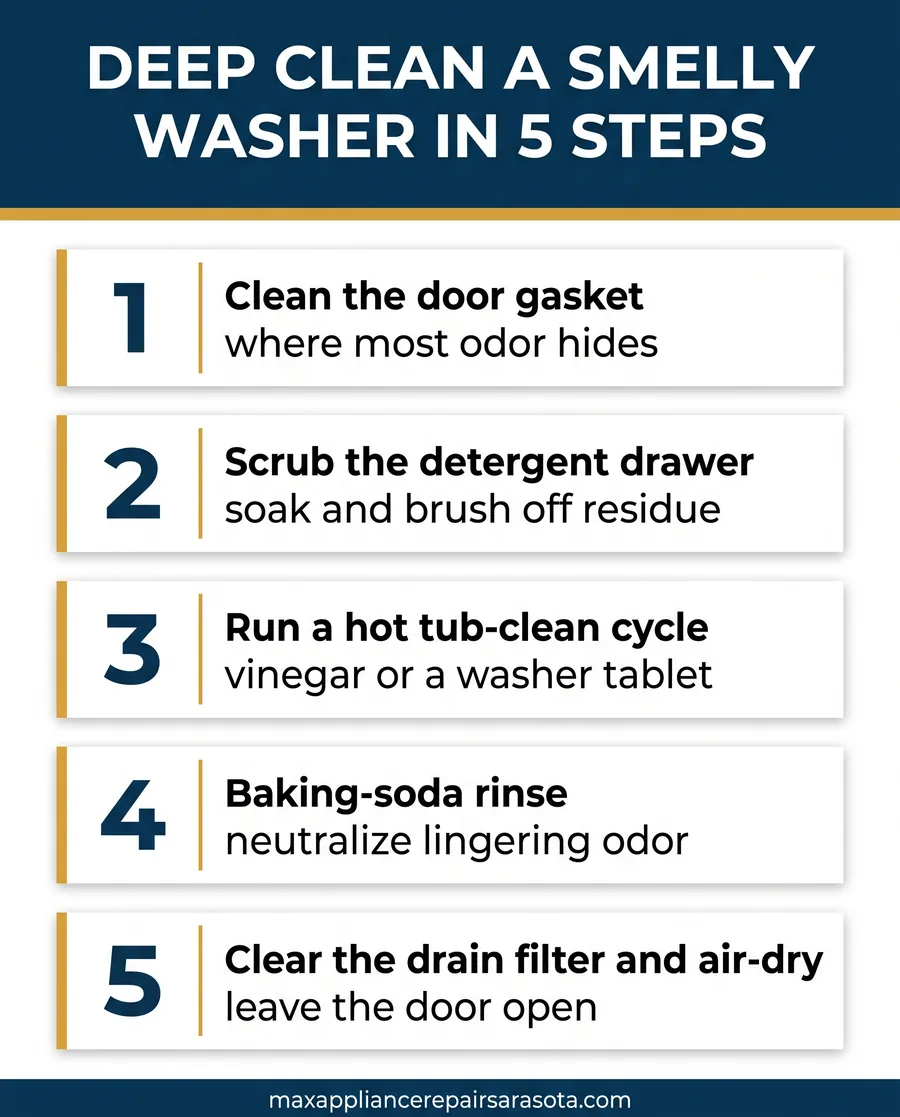
- Empty the drum and wipe it down. Remove anything left inside, then wipe the drum and door with a cloth to clear loose grime.
- Clean the door gasket. On a front-loader, peel back every fold of the rubber boot and wipe out the trapped water, hair, and mold with a mix of warm water and a little detergent or a mold-safe cleaner. This is where most of the smell lives.
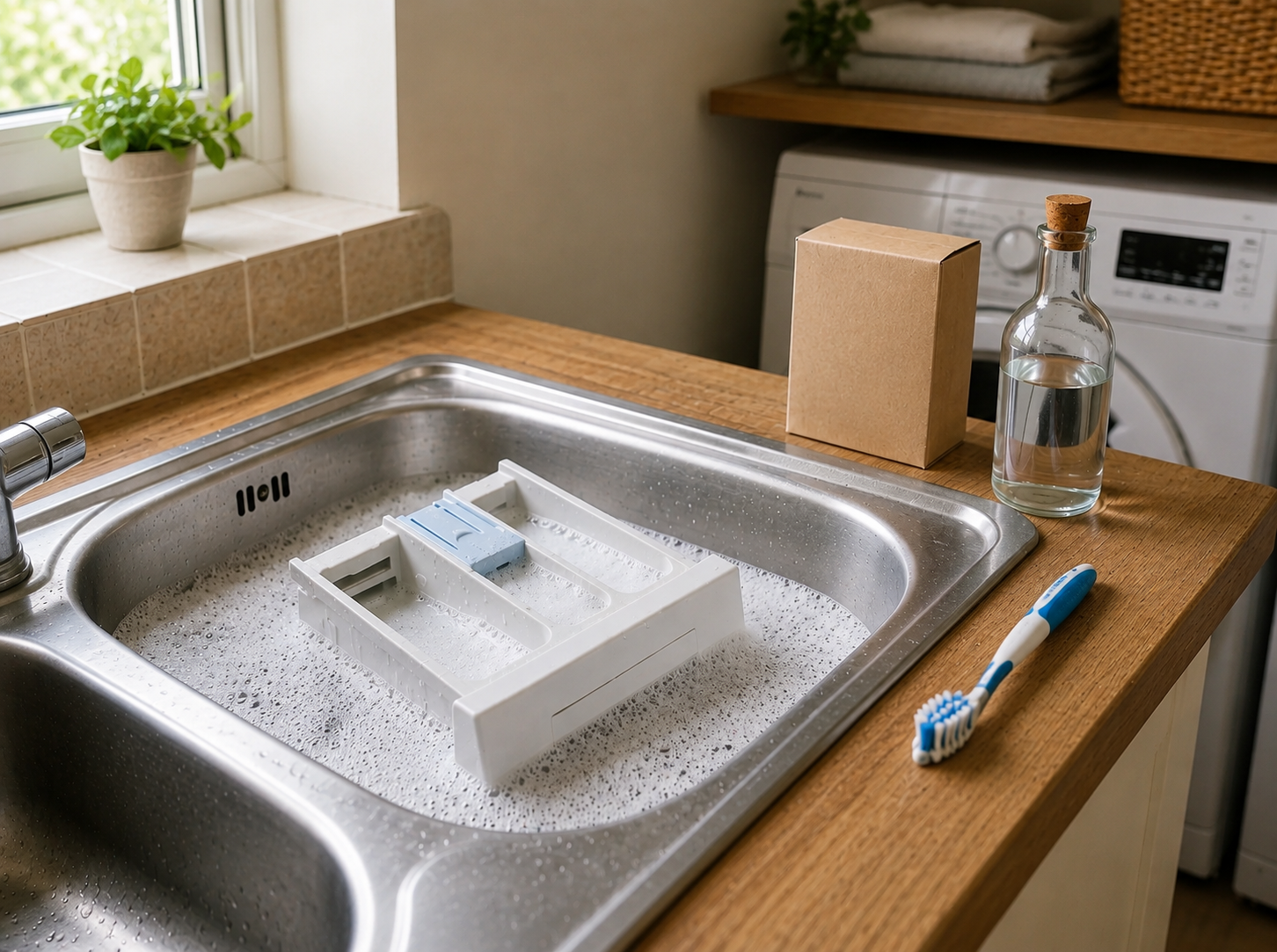
- Scrub the detergent drawer. Pull the drawer out fully, soak it in warm water, and scrub off the slimy residue with an old toothbrush. Clean the cavity it slides into as well.
- Run a hot clean cycle. Use your machine’s tub-clean or self-clean setting, or run the hottest wash empty with a washer-cleaning tablet or two cups of white vinegar. Do not add bleach and vinegar together.
- Follow with a baking-soda rinse. Sprinkle half a cup of baking soda in the drum and run one more hot cycle to neutralize any lingering odor and residue.
- Check and clean the drain filter. Many front-loaders have a small access panel at the bottom front. Lay towels down, open it, and clear out the lint, coins, and gunk that trap water. Empty models vary, so check your manual for the location.
- Leave the door and drawer open to dry. Once everything is clean, prop the door and drawer open so the inside can fully air out.
Pro tip
If the gasket has deep black staining that will not wipe away, let a mold-safe cleaner sit on it for ten minutes before scrubbing, then rinse well. Staining that keeps returning within days can mean water is still pooling in a fold or the seal itself is degrading, which is worth having a technician look at.
Habits that keep the odor gone
A deep clean resets the machine. These habits keep it from getting funky again, which matters more in our climate than in a dry one:
- Leave the door and detergent drawer open between loads so the inside can dry.
- Use less detergent, not more. Excess soap feeds biofilm. High-efficiency machines need only a small amount.
- Run a hot tub-clean cycle once a month, or every two weeks in the peak humid season.
- Move wet laundry to the dryer promptly instead of letting it sit in a closed drum.
- Wipe the gasket dry after big loads if your front-loader runs daily.
Habits differ by machine type, so here is how the smell risk and upkeep compare across the common washer styles. Use it to set a realistic cleaning rhythm for your machine.
| Washer type | Odor risk | Main trouble spot | Cleaning rhythm (humid climate) |
|---|---|---|---|
| Front-load | Higher | Door gasket and drawer | Tub-clean every 2 weeks, wipe gasket |
| High-efficiency top-load | Moderate | Low water use, biofilm | Tub-clean monthly, less detergent |
| Traditional top-load | Lower | Standing water, drain | Clean cycle monthly, dry between loads |
| Stacked or closet unit | Higher | Poor airflow | Leave door open, tub-clean every 2 weeks |
When the smell will not leave
If you have deep cleaned twice and the smell returns within days, the problem is probably mechanical rather than hygienic. A sour or sewer smell that survives cleaning usually points to standing water the routine cannot reach: a clogged pump, a sagging or kinked drain hose, or a drainage line issue behind the wall.
When a washing machine smells even after two thorough cleanings, the problem is often mechanical rather than a simple cleaning issue. A clogged pump, blocked drain hose, or standing water inside the machine may require professional diagnosis.
Red flag: more than a smell
A rotten-egg or sewer odor combined with slow draining, water left in the drum after a cycle, or a machine that backs up can mean a blocked pump or drain. That is not solved by cleaning. Stop guessing and have the pump and drain path inspected before mold spreads or water damage starts.
For guidance on keeping indoor moisture and mold in check beyond the washer, the EPA mold cleanup guide is a solid, non-commercial reference. When the odor traces back to the machine itself, our team covers greater Sarasota and can check the pump, hoses, and seals in one visit. Start at our whole-home appliance service in Sarasota to see what we handle.
Download the free quick guide
A one-page routine to strip out washer odor and humidity habits that keep it from coming back.
Frequently Asked Questions
Need a hand with this one? Max Appliance Repair Sarasota covers Sarasota and Manatee County seven days a week, 7 AM to 10 PM. See washer repair in Sarasota or call (941) 200-1092 and we will book the next opening.
