


Last updated: August 2026. Reviewed by Maksim Grinvald, owner, Max Appliance Repair Sarasota.
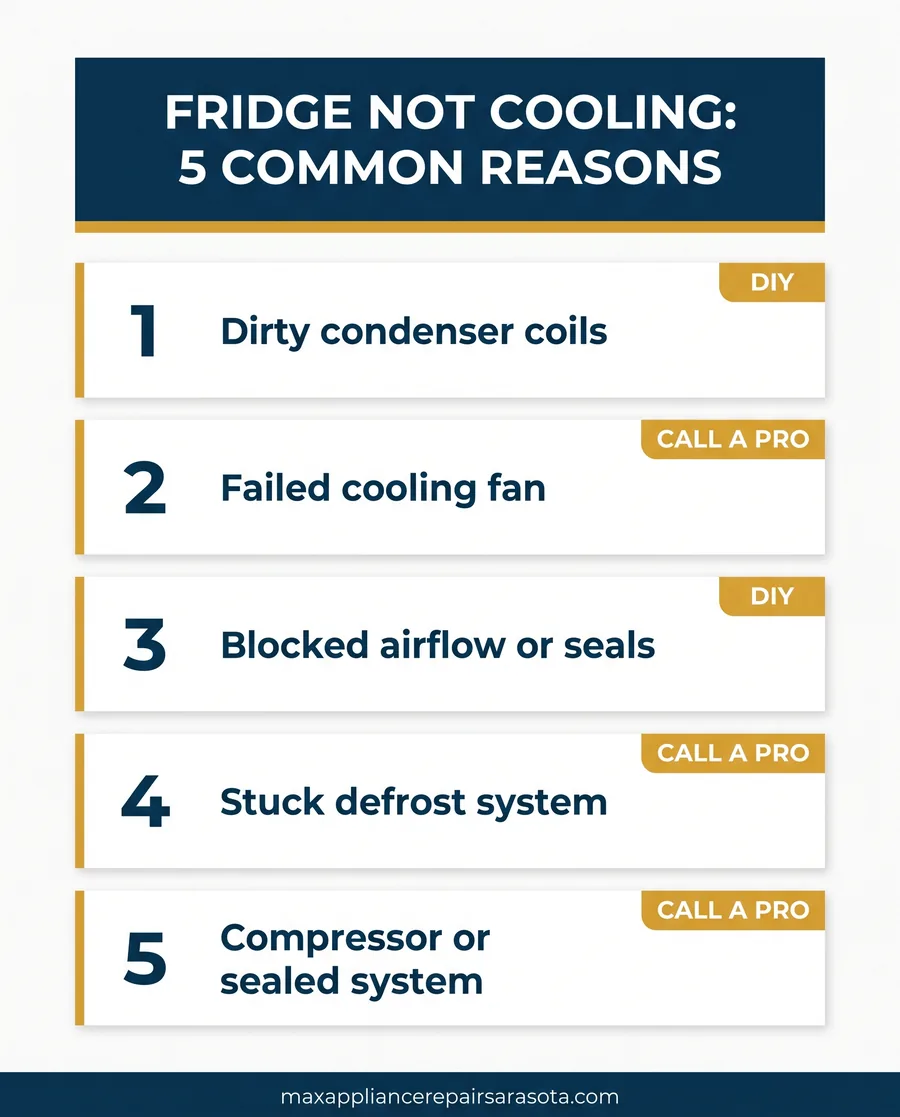
A fridge not cooling in a Florida home is a race against the clock, because our heat and humidity push the food-safety window shut faster than in most of the country. The five reasons behind a warm refrigerator are almost always the same: blocked condenser coils, a dead condenser or evaporator fan, blocked vents, a failed defrost system, or a compressor or sealed-system fault. Our Sarasota refrigerator technicians walk into all five regularly, and the first three are things you can check today.
Below is how to work through them in order, from the easy fixes to the ones that need a pro, plus the Florida-specific reason your fridge has to work harder here than the manual assumes. If your food has been above 40 degrees Fahrenheit for more than a couple of hours, deal with that first.
In this article
Reason 1: Dirty Condenser Coils
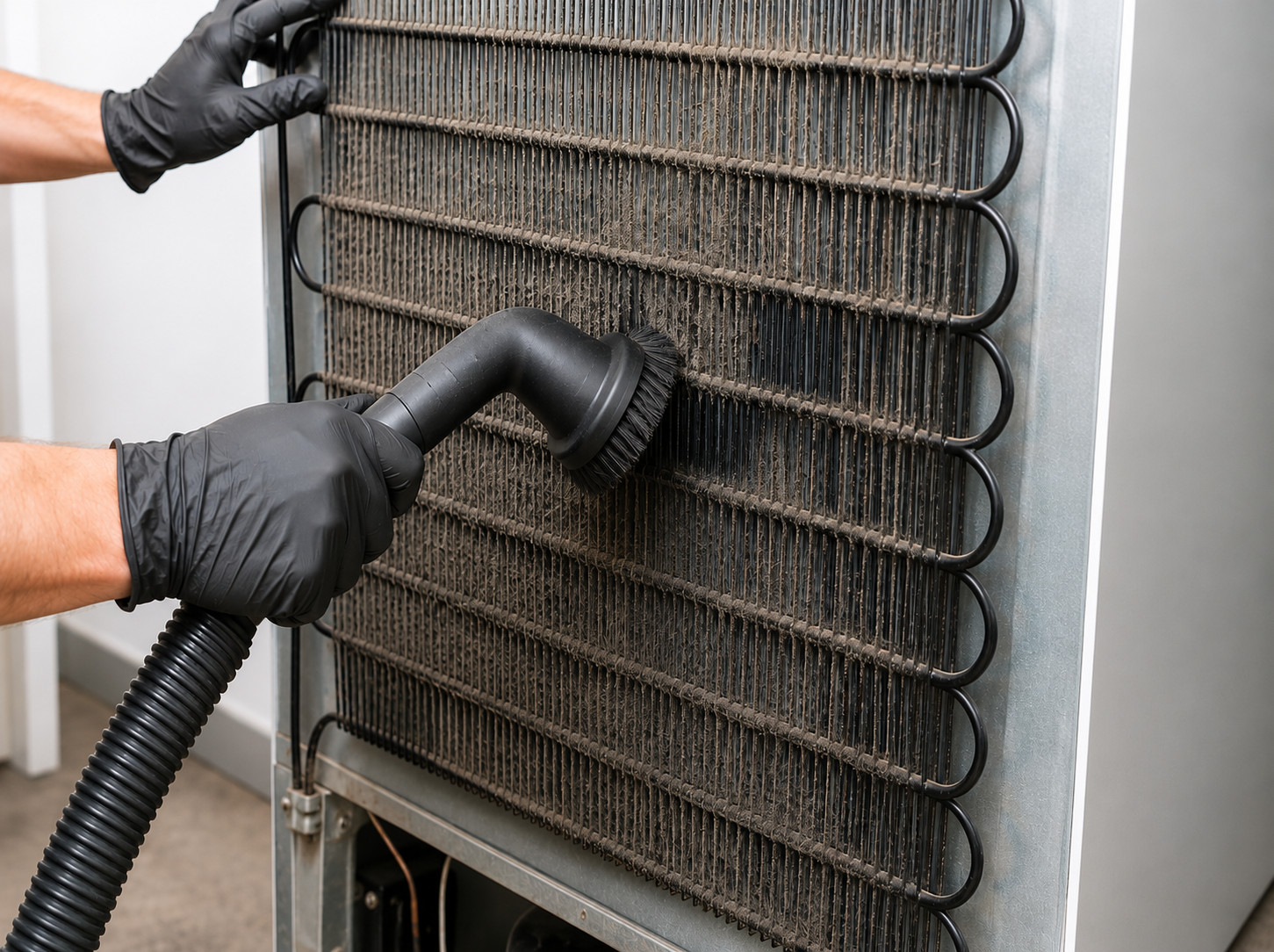
This is the most common reason a fridge is not cooling, and the easiest to fix. The condenser coils dump heat out of the fridge. When they cake over with dust, pet hair, and lint, they cannot release that heat, so the whole system runs hot and the interior creeps up. In Sarasota, coils clog faster because we run the fridge harder year-round.
Find the coils behind the toe-kick grille at the bottom front or on the back of the unit. Unplug the fridge, vacuum the coils and brush out the dust, and give the compressor area room to breathe. Do this twice a year here, not once. It is the single best thing you can do to keep a refrigerator cooling in our climate.
If your fridge not cooling has become a recurring problem, dirty condenser coils are the first place to look. Cleaning them regularly can restore proper airflow and prevent unnecessary strain on the compressor.
Quick take
Warm fridge, humming compressor, coils you cannot remember ever cleaning? Start there. Dirty condenser coils cause more warm-fridge calls than everything else combined, and cleaning them is free.
Reason 2: A Failed Cooling Fan
A refrigerator has two fans doing the real work. The condenser fan cools the compressor and coils. The evaporator fan moves cold air from the freezer into the fridge section. If the evaporator fan quits, the symptom often looks confusing: the freezer stays cold but the fridge turns warm because the cold air isn’t being circulated. If the condenser fan seizes, the compressor will quickly overheat and shut down, leaving your entire unit warm.
Open the freezer and listen. A healthy evaporator fan hums behind the back panel. Silence, or a fan you can hear straining or clicking, is a red flag. The condenser fan sits down by the compressor and can seize from dust or a bad motor. Both are common failures, and both leave the compressor running hot with nowhere for the cold to go.
Did you know
A freezer that stays cold while the fridge turns warm is the classic sign of an evaporator fan or airflow problem, not a dead fridge. The cold is still being made, it just is not being moved. That single clue rules out a lot of worst-case scenarios before a technician even arrives.
Reason 3: Blocked Airflow Inside
If your fridge not cooling, sometimes nothing is actually broken. Blocked air vents, overcrowded shelves, or poor airflow can prevent cold air from reaching every section of the refrigerator. The cold air vents between the freezer and fridge compartments get blocked by an overpacked shelf, a stray bag, or a wall of frost. Air cannot circulate, so one part of the fridge cools while another stays warm. It is worth ruling out before you assume a part has failed.
- Find the vents. Look for the slotted openings at the back or top of the fresh-food compartment and make sure nothing is pressed against them.
- Do not overpack. A jammed fridge blocks its own airflow. Leave gaps for air to move, especially near the vents.
- Check the door seals. Pinch a dollar bill in the closed door and tug. If it slides out easily, the gasket is leaking cool air and letting humid Florida air in.
- Watch for frost. A wall of ice on the back panel points to a defrost problem, covered next.
Pro tip
Give your fridge 24 hours to recover after any fix, and keep a cheap appliance thermometer inside. The fridge should hold at or below 40 degrees Fahrenheit and the freezer at 0. Numbers tell you whether a fix worked far better than a hand test, and they are the same numbers food-safety guidance uses.
Reason 4: A Stuck Defrost System
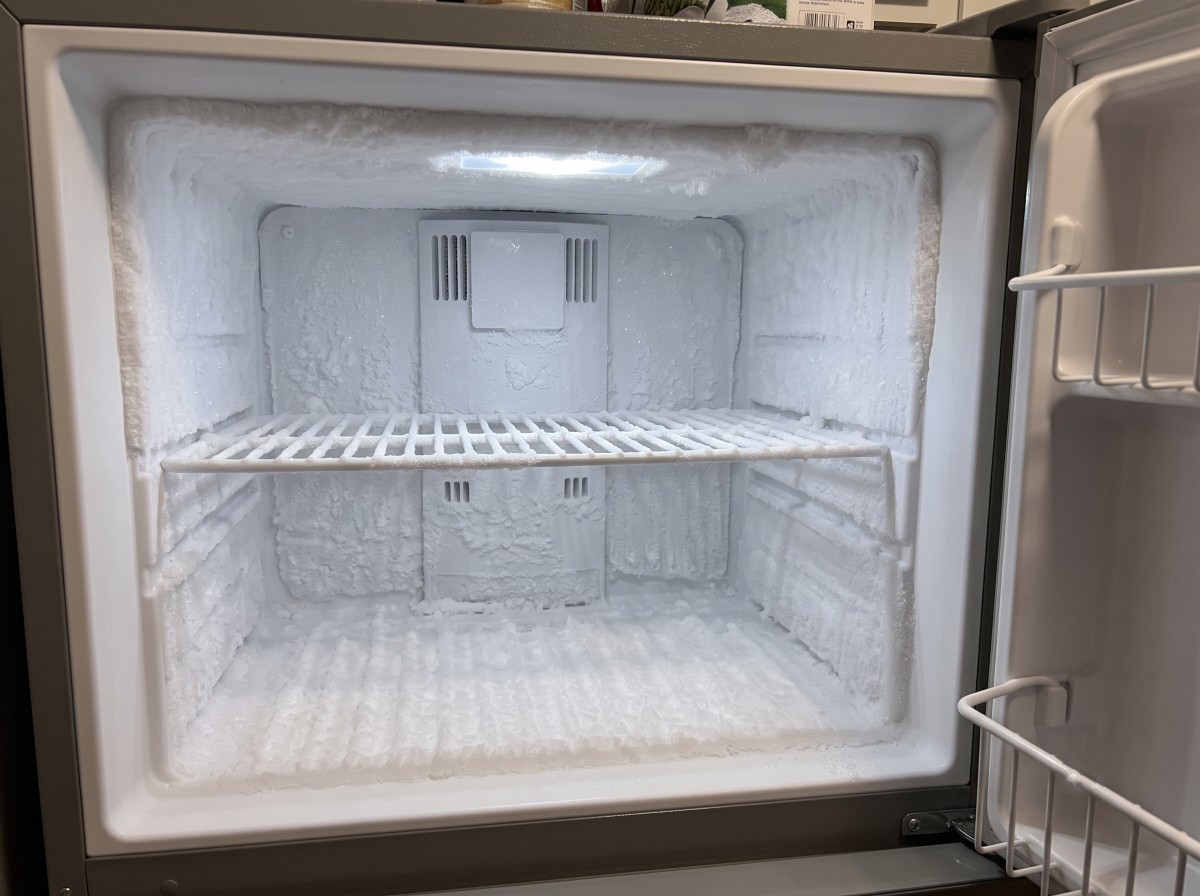
Frost-free refrigerators run a defrost cycle to melt ice off the evaporator coils. When the defrost heater, timer, or sensor fails, ice builds into a solid block over those coils. Air can no longer pass through, and the fridge slowly warms even though the compressor and fans seem fine. The tell is a thick sheet of frost behind the freezer’s back panel.
This table lines up the five reasons against what you would notice and what to do next. Use it to place your own symptom before you decide whether it is a today fix or a service call.
| Reason | What you notice | DIY-friendly? | What to do |
|---|---|---|---|
| Dirty condenser coils | Whole fridge warm, hums | Yes | Unplug, vacuum and brush the coils |
| Failed cooling fan | Freezer cold, fridge warm | Sometimes | Listen for the fan, call if silent |
| Blocked airflow or seals | Uneven cooling | Yes | Clear vents, test the door gasket |
| Stuck defrost system | Ice wall behind panel | No | Have the defrost parts tested |
| Compressor or sealed system | Warm, silent or clicking | No | Professional diagnosis required |
Reason 5: Compressor or Sealed System
If the coils are clean, the fans run, airflow is clear, and there is no ice wall, the trouble may be in the compressor or the sealed refrigerant system. A compressor that hums but never cools, clicks on and off, or sits dead silent points here. So does a system low on refrigerant from a leak. This is not a DIY zone: sealed-system repair requires certified handling of refrigerant and specialized tools. When a fridge not cooling cannot be traced to dirty coils, airflow, fans, or a defrost issue, the compressor or sealed refrigeration system becomes the most likely cause and should be diagnosed by a qualified technician.
Red flag: food-safety clock
Once the fridge holds above 40 degrees Fahrenheit, perishable food is on a clock. In Florida heat that clock runs fast. If the interior has been warm for more than two hours, move food to a cooler with ice and do not risk questionable items. Health guidance is clear: when in doubt, throw it out.
For the temperature targets that keep food safe and a fridge efficient, the ENERGY STAR refrigerator resource is a reliable, non-commercial reference. When the problem lands on a fan, defrost part, or the sealed system, our team covers greater Sarasota and can diagnose all five reasons in one visit. Start at our whole-home appliance service in Sarasota to see what we cover.
Download the free quick guide
A one-page guide to the five reasons a fridge stops cooling and what to check before you call.
Frequently Asked Questions
A warm fridge is not automatically a dead fridge. Three of the five reasons are things you can rule out in an afternoon, and even the mechanical ones are usually a single part. When the easy checks do not bring the temperature back down, our technicians diagnose refrigerators across North Port, Lakewood Ranch, and the greater Sarasota area, out to Osprey. Reach out for a diagnosis and we will find the real reason before your food is at risk.
Need a hand with this one? Max Appliance Repair Sarasota covers Sarasota and Manatee County seven days a week, 7 AM to 10 PM. See refrigerator repair in Sarasota or call (941) 200-1092 and we will book the next opening.
