
Last updated: August 2026. Reviewed by Maksim Grinvald, owner, Max Appliance Repair Sarasota.
You pull the portafilter, the pump hums, and instead of a slow, honey-like stream, you get a thin, fast dribble or nothing at all. Dealing with a Breville espresso machine no pressure issue, is one of the most common complaints owners encounter. Fortunately, most of the time it does not indicate a broken machine. It is often caused by a clog, a grind issue, or scale build-up from hard water, many of which you can fix at your kitchen counter in ten minutes. When it turns out to be a failing pump or valve, our espresso and coffee machine repair service is ready to help.
The trick is knowing the cause before you start taking anything apart. A machine that cannot build pressure and one that is simply clogged look identical in the cup, but the fixes are entirely different. This guide walks through what low pressure really means, common causes, safe cleaning and adjustment steps to try at home, and when it is smarter to hand the repair to a technician.
In this article
What no pressure actually means on a Breville machine
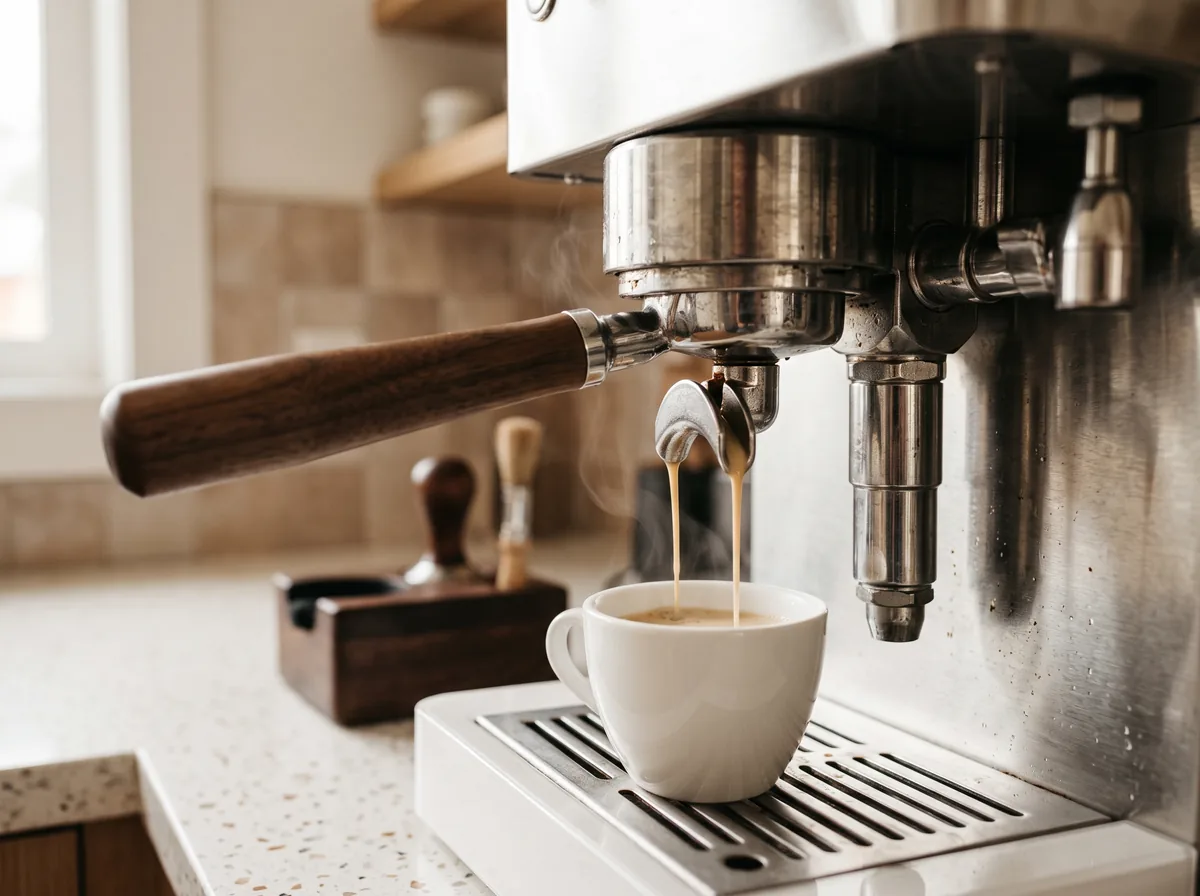
Espresso is made by forcing hot water through a tightly packed puck of finely ground coffee at high pressure (around 9 bars on a properly calibrated machine). That resistance is what builds crema and body. When an espresso machine lacks pressure, it typically means one of two things: water rushes through too fast with no resistance, or barely any water comes out at all.
These two symptoms point in opposite directions. Water gushing through fast, resulting in a watery shot and thin crema, usually indicates the coffee puck is not creating enough resistance, which stems from a grind, dose, or basket issue. Water barely trickling or a pump straining loudly suggests a blockage or restricted flow, such as a clogged screen, scale inside the boiler, or a loss of pump prime. Identifying which symptom you have is the fastest way to find the fix.
Common causes for no pressure
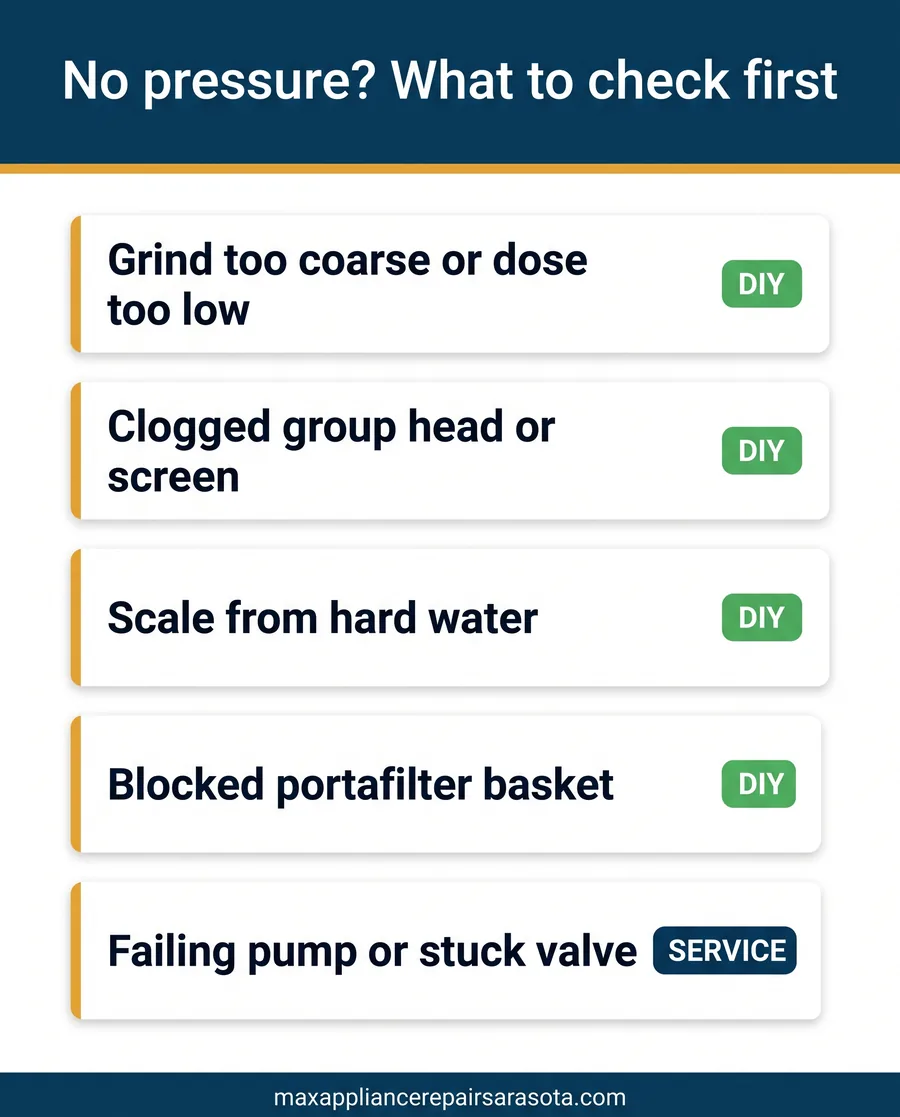
Here are the primary causes, ordered from most common and easily fixable to those requiring technical repair. Work down this list to isolate the problem:
- Grind too coarse or dose too low: The number one cause of a fast shot with no pressure. If coffee grounds are too coarse or under-dosed, water passes straight through without resistance and the pressure gauge will not climb.
- Clogged group head or shower screen: The screen spreading water over the puck collects coffee oils and fine grounds over time. A dirty screen restricts and channels flow, dropping overall extraction pressure.
- Blocked or worn portafilter basket: Tiny basket holes can clog with old coffee oils or wear out over time, preventing proper water distribution.
- Scale build-up from hard water: Dissolved minerals settle inside the boiler, pump, and lines over time. Scale narrows water passages, which is a leading cause when a breville espresso machine no pressure issue develops gradually over several months.
- Incorrect tamping or uneven puck preparation: Tamping too softly or unevenly creates channels for water to shoot through, preventing proper resistance against the puck.
- Failing or air-locked pump: If the pump loses prime or fails internally, it cannot generate adequate pressure. You may hear it straining or buzzing while delivering little to no water.
- Stuck solenoid or one-way valve: Internal valves route water and hold pressure. If a valve sticks or fails, pressure vents internally rather than reaching the portafilter.
The first five issues can be corrected through routine cleaning and adjustment. The final two require internal repairs. For specific descaling steps, refer to official Breville support resources for your model.
Fixes you can safely try at home
Try these troubleshooting steps in order. Most pressure complaints can be resolved without needing a service call:
- Adjust the grind and dose: Adjust your grinder one or two steps finer and ensure the basket is filled to the correct dosage level. A finer grind restores necessary flow resistance.
- Tamp level and consistently: Apply firm, level pressure to ensure a uniform coffee puck. Consistency is more important than excessive force.
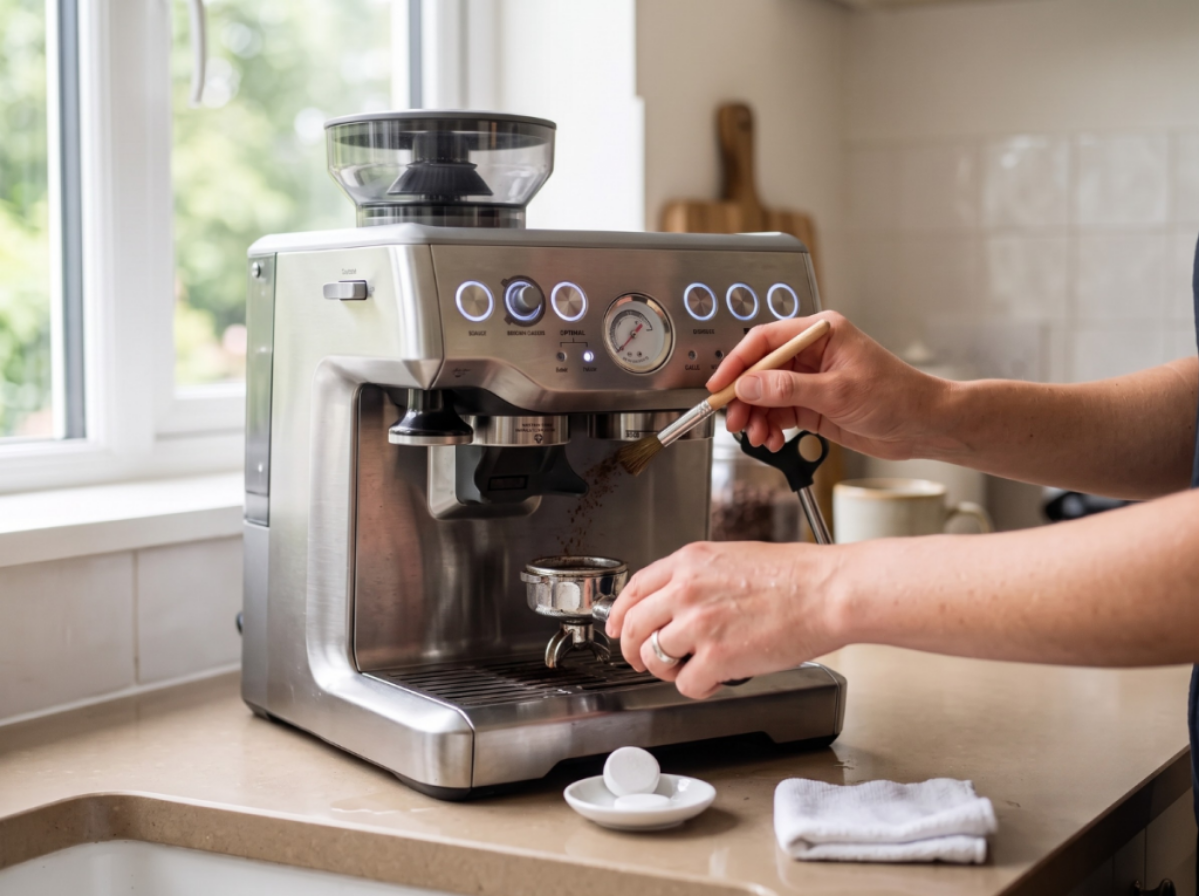
- Clean the shower screen and group head: Wipe and brush the screen, then run a cleaning cycle using a blind filter basket and cleaning tablet per manufacturer instructions.
- Backflush the system: If supported by your specific Breville model, perform a backflush cycle to clear internal group head channels.
- Soak or replace the portafilter basket: Clean blocked basket holes using a fine pin or soak in espresso cleaning solution. Replace worn baskets if necessary.
- Descale the machine: Run a complete descaling cycle using a dedicated espresso descaling solution to dissolve mineral build-up inside internal lines.
- Prime the pump: If water flow is minimal, run water through the group head without a portafilter attached, or operate the hot water/steam spout to clear potential air locks.
Did you know?
Coffee oils harden inside the group head and shower screen faster than expected. For machines used daily, performing a weekly group head wipe-down and monthly deep clean prevents major pressure drops caused by residual oil buildup.
DIY or call a technician: a quick decision table
Use this reference table to determine whether your pressure issue requires basic maintenance or professional repair:
| Symptom | Likely Cause | Recommended Action |
|---|---|---|
| Fast, watery shot, no crema | Grind too coarse or dose too low | Adjust grind size and dose (DIY) |
| Uneven or spraying flow | Clogged shower screen or puck channeling | Clean group head; level tamp (DIY) |
| Gradual pressure loss over months | Mineral scale accumulation | Run a descaling cycle (DIY) |
| Weak flow from single basket only | Blocked or damaged basket holes | Clean or replace filter basket (DIY) |
| Loud straining pump with low flow | Air-locked or failing pump | Prime pump; request service if unresolved |
| No pressure after cleaning and descaling | Internal pump or solenoid valve failure | Schedule professional repair |
| Water leaks, tripped breaker, or burning smell | Internal electrical or heating element fault | Unplug immediately and call a technician |
The Sarasota hard-water problem
Southwest Florida tap water contains elevated concentrations of dissolved calcium and magnesium. Learn more about regional water parameters from the US Geological Survey water hardness guide. For espresso equipment, untreated hard water causes mineral scale to form inside heating elements, boilers, and narrow water lines, progressively restricting pressure over time.
Regular descaling combined with filtered or low-mineral water prevents scale build-up from restricting flow. If your machine’s performance has degraded gradually over several months, scale accumulation is the primary suspect.
Pro tip
Schedule descaling every 4 to 6 weeks for regular daily use in hard-water areas rather than waiting for machine warning indicators. Using filtered water extends component longevity and maintains consistent brewing pressure.
Download the free quick guide
Access our quick reference troubleshooting guide for fixing a breville espresso machine no pressure issue at home.
Frequently Asked Questions
Cleaned, descaled, and adjusted your grind setting, but your machine still lacks pressure? Max Appliance Repair provides expert espresso and coffee machine service across Siesta Key, Osprey, North Port, and the surrounding Sarasota areas. Contact our team today to schedule professional diagnostic service.
Need a hand with this one? Max Appliance Repair Sarasota covers Sarasota and Manatee County seven days a week, 7 AM to 10 PM. See coffee machine repair in Sarasota or call (941) 200-1092 and we will book the next opening.
