
Last updated: August 2026. Reviewed by Maksim Grinvald, owner, Max Appliance Repair Sarasota.
If you are dealing with a refrigerator not cooling but freezer is still working, you are not necessarily dealing with a dead appliance. In most side-by-side and top-freezer models, the fresh-food compartment does not have its own cooling source.(Note: Some newer, high-end French Door refrigerators use ‘dual evaporators’ and actually do have a second set of cooling coils specifically for the fridge, which can develop their own defrost issues). Instead, it relies on cold air pulled from the freezer through a fan and air vent. When the freezer stays cold while the fridge warms up, the issue is almost always in this shared airflow path rather than a failed compressor. Knowing which parts tend to fail can help you troubleshoot the problem and determine when to call for professional refrigerator repair in Sarasota.
In this article
Why the freezer stays cold while the fridge warms up
Most standard refrigerators use a single-evaporator design. There is only one cooling coil, located inside the freezer compartment. An evaporator fan blows air across this coil and pushes cold air into the fresh-food compartment through an air duct. A damper flap opens and closes to control airflow and maintain temperatures between 37°F and 40°F in the fridge.
If air delivery from the freezer is blocked or interrupted, the freezer remains cold while the fresh-food section warms to room temperature. The compressor usually continues to operate normally, indicating that the problem lies in the airflow system between the compartments.
Quick take
A cold freezer with a warm fridge almost always points to an airflow blockage or a failing component between the compartments. Common causes include a faulty evaporator fan, a frost buildup from a defrost defect, a jammed air damper, or a malfunctioning temperature sensor.
Top causes of fridge-only cooling failure
Technicians typically inspect the following components in order of failure frequency when troubleshooting a unit where the refrigerator is not cooling but freezer is working:
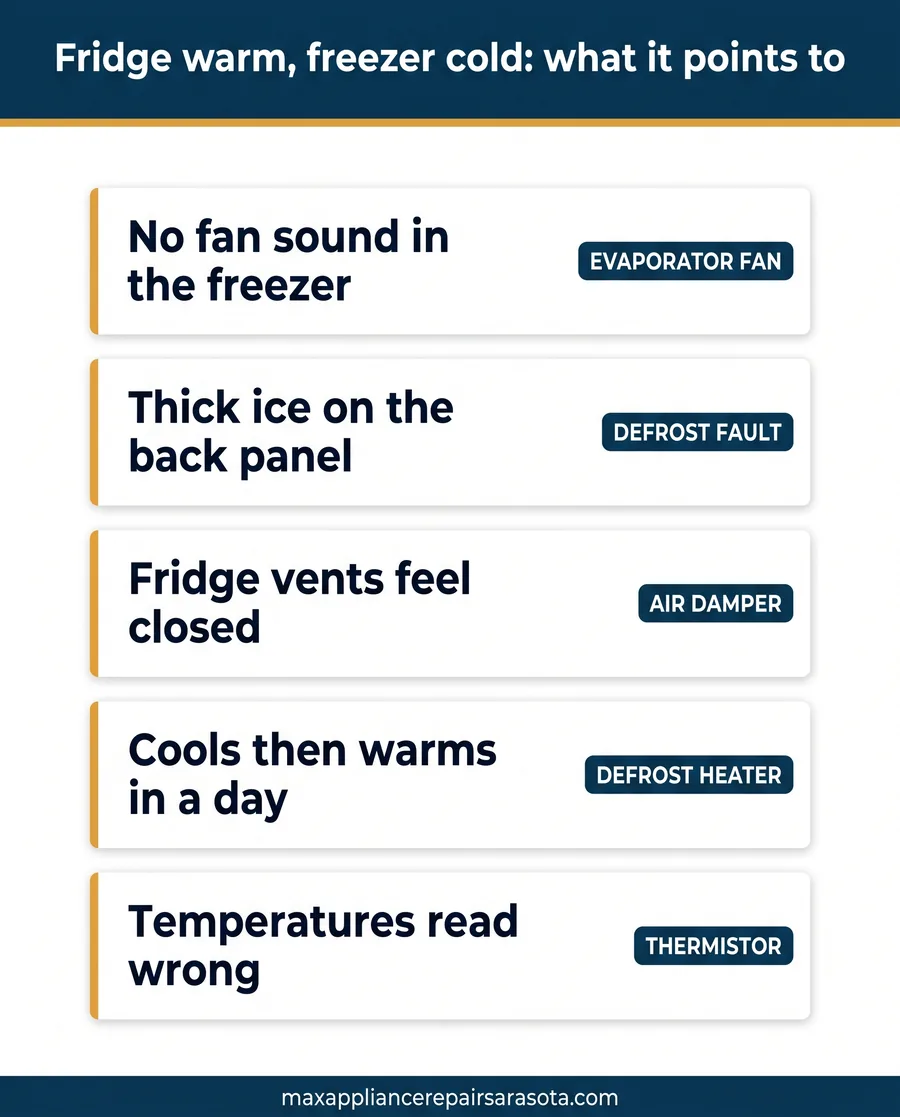
- Evaporator Fan Motor: The evaporator fan circulates cold air out of the freezer. If the motor fails, cold air remains trapped in the freezer section. A squeaking, grinding sound or complete silence from the fan area often indicates a failed fan motor.
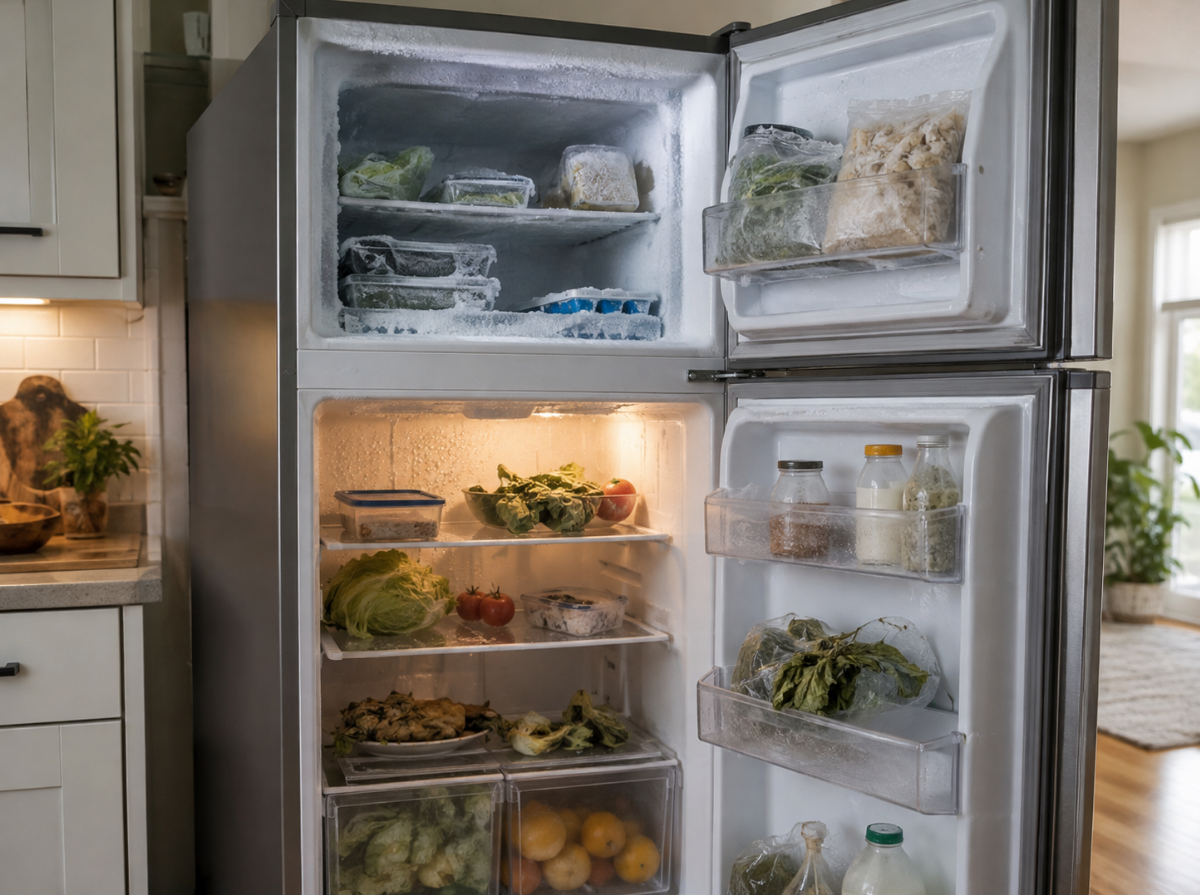
- Defrost System Failure: Refrigerators periodically melt frost off the cooling coils. If the defrost heater, thermostat, or control timer fails, frost builds up over the evaporator coils and blocks the airflow duct leading to the fresh-food section. High ambient humidity accelerates this ice accumulation.
- Stuck Air Damper: The air damper acts as a door regulating airflow into the fresh-food side. If it gets stuck closed or blocked by food items pushed against the vent, cold air cannot enter the fridge.
- Faulty Defrost Thermostat: When the defrost thermostat fails, the coils freeze over. A common symptom is a fridge that cools properly for a day or two after a manual thaw, then warms up again as ice rebuilds.
- Bad Thermistor or Control Board: Thermistors monitor internal temperatures. If a sensor reports incorrect data, the main control board may not signal the fan or damper to operate.
Most causes are related to airflow components rather than sealed refrigerant leaks. For official guidelines on refrigeration efficiency and appliance ratings, consult the ENERGY STAR refrigerator guide.
Safe checks you can perform yourself
Before calling for service, perform these quick, non-technical checks:
- Listen for the fan: Open the freezer door and manually press the door switch. You should hear the evaporator fan running behind the back panel. If it is silent or making unusual noises, the fan may be defective.
- Check for frost buildup: Look at the back wall of the freezer. Light frost is normal, but a heavy layer of ice indicates a defrost system malfunction blocking the vents.
- Inspect interior air vents: Ensure food containers or packages are not blocking the return or supply vents inside the fresh-food section.
- Verify the damper opening: Check that no items are physically jamming the damper door shut.
- Confirm settings and seals: Make sure the temperature controls were not accidentally changed, the unit is not in demo mode, and the door gaskets seal tightly.
Pro tip
If you notice heavy ice on the back freezer wall, unplug the unit for 24 to 48 hours to complete a full manual defrost. Place towels to catch melting water. If the refrigerator cools normally for a couple of days after restarting before warming up again, you have confirmed a defrost system failure.
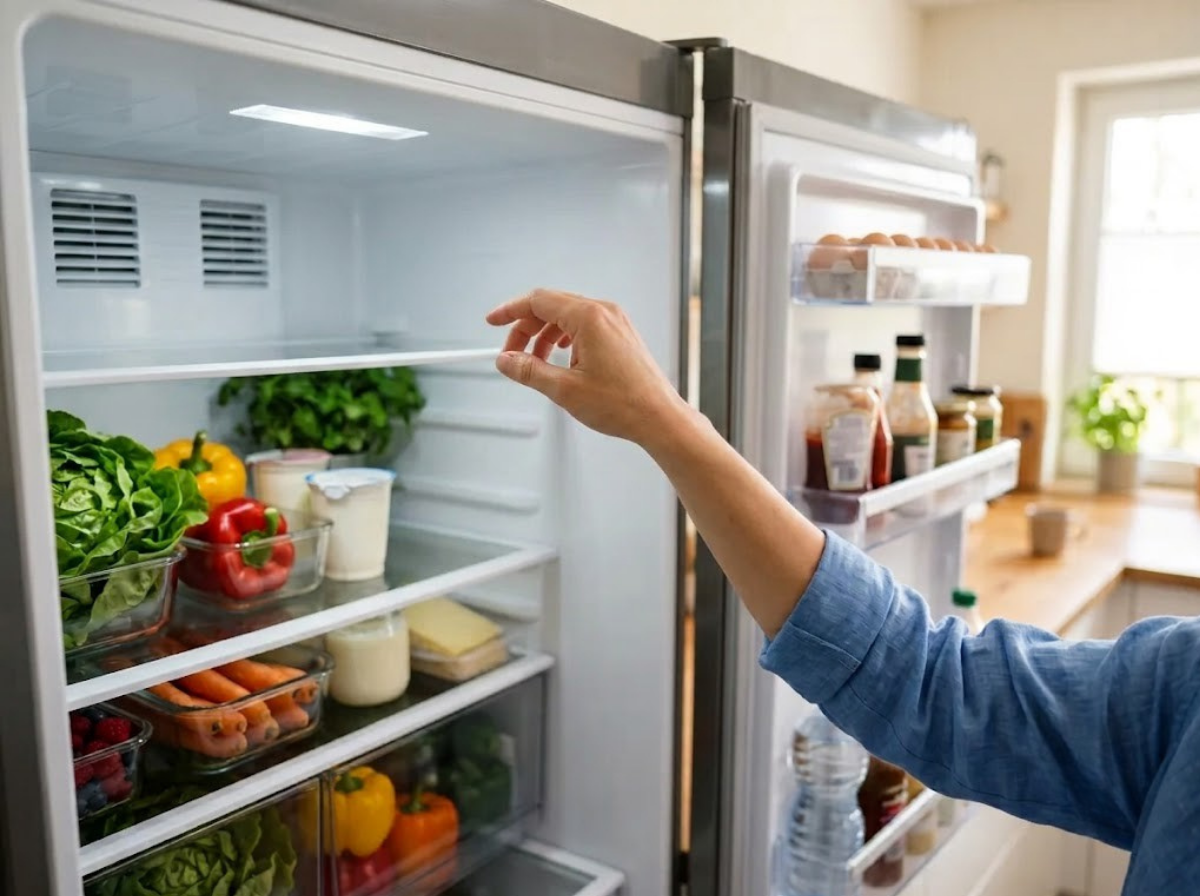
Symptom to cause diagnostic table
Use this reference table to match your refrigerator’s symptoms with the most probable cause:
| Symptom | Likely Cause | Action Required |
|---|---|---|
| Freezer cold, fridge warm, no fan noise | Failed evaporator fan motor | Professional repair |
| Thick ice sheet on freezer back panel | Defrost heater or thermostat failure | Professional repair |
| Cools after defrosting, warms again after 2 days | Defrost control system defect | Professional repair |
| No airflow coming through fresh-food vents | Stuck or damaged air damper | Professional repair |
| Fluctuating or incorrect temperature readings | Defective thermistor or control board | Professional repair |
| Food stacked directly against air vents | Restricted airflow | Rearrange interior items |
| Both fridge and freezer sections remain warm | Compressor or sealed-system leak | EPA Section 608-certified technician required |
When to call an EPA Section 608-certified technician for sealed-system issues
While airflow problems are generally straightforward to resolve, sealed-system issues are more complex. The sealed system includes the compressor, evaporator coils, condenser, and refrigerant lines. If both your fridge and freezer are warming up or failing to hold temperature, the issue may extend beyond airflow to a broader sealed-system problem (for more broad issues, see our full guide on 5 common reasons your fridge isn’t cooling in Florida homes).
Refrigerant handling is federally regulated under US EPA Section 608, requiring EPA Section 608-certified technicians to perform sealed-system repairs. A certified technician has the proper recovery equipment and diagnostics to pinpoint leaks and evaluate whether a repair is cost-effective compared to replacing the unit.
Download the free quick guide
A concise reference guide on troubleshooting why your fridge warms up while the freezer stays cold.
Frequently Asked Questions
Is your freezer cold while your fresh-food compartment remains warm? Max Appliance Repair provides expert diagnostic and repair services across Bradenton, Venice, Lakewood Ranch, and greater Sarasota. Contact our team today to restore your refrigerator to proper working order.
Need a hand with this one? Max Appliance Repair Sarasota covers Sarasota and Manatee County seven days a week, 7 AM to 10 PM. See refrigerator repair in Sarasota or call (941) 200-1092 and we will book the next opening.
