
Last updated: August 2026. Reviewed by Maksim Grinvald, owner, Max Appliance Repair Sarasota.
A washing machine leaking onto the laundry-room floor is one of those problems Sarasota homeowners should never let ride, because our slabs, tile, and humidity turn a small puddle into mold and warped baseboards fast. Before you panic, know this: leaks commonly come from supply or drain hoses, the pump area, door seal, dispenser, tub or household drain, and you can narrow it down in minutes. Our Sarasota washer service team tracks most leaks to a loose fitting or a worn part rather than a dead machine.
Here is exactly where to look, what each leak location tells you, and what to check first before water damage starts. If water has reached the outlet, cord or power strip, do not touch the machine or plug. Cut power at the breaker, shut off the water supply if safely accessible and call a qualified technician.
In this article
First move: stop the water safely
When a washing machine is leaking, your first moves are essential to stop the damage and stay safe:
- If water has reached the outlet, cord or power strip, do not touch the machine or plug. Cut power at the breaker, shut off the water supply if safely accessible and call a qualified technician.
- If water is clear of electrical components, pause or cancel the load, then close the hot and cold supply valves behind the machine.
- Dry the floor and run one short cycle to watch. With towels down, start a rinse and watch closely to see where the water actually appears. The spot it starts tells you the source.
Quick take
Water at the back usually means a hose or household drain issue. Water at the front-bottom points to the pump or filter. Water from the door on a front-loader points to the seal, dispenser, or tub. Watching one short cycle with the floor dry helps you pinpoint the issue quickly.
Leaks from the hoses and connections
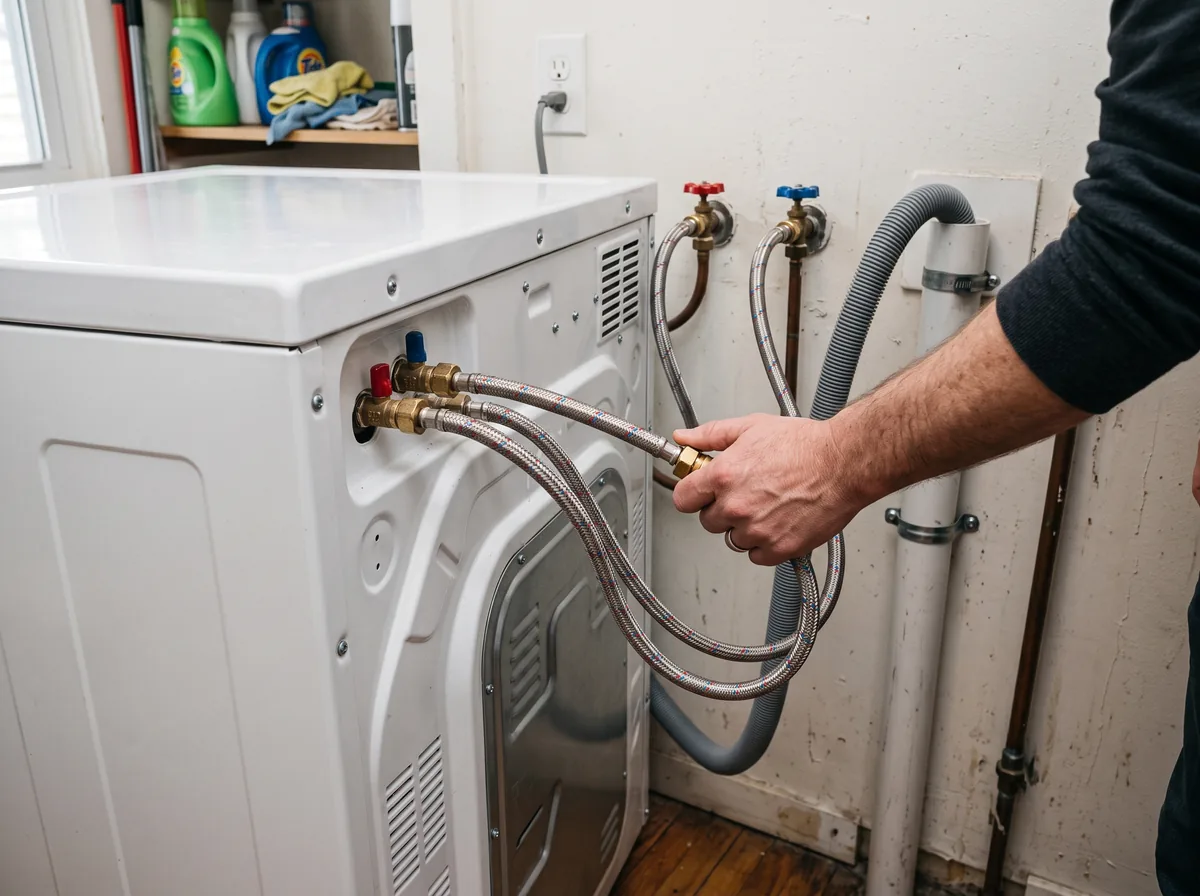
Hoses are a frequent source of washer leaks, and the easiest to check. Behind the machine sit the two supply hoses bringing hot and cold water in, plus the drain hose carrying water out. Any of the three can loosen, crack, or slip.
- Check the supply-hose fittings. Feel where the hot and cold hoses screw onto the valves and the back of the machine. A loose coupling or a worn rubber washer inside the fitting is a classic slow drip.
- Inspect the hoses themselves. Look for bulges, cracks, or rust-colored crust. Rubber supply hoses get brittle, and in Florida heat they age faster. Braided stainless hoses last longer.
- Trace the drain hose and household drain. Make sure the drain hose is seated in the standpipe or laundry tub and not cracked where it flexes. Verify that the household drain itself isn’t backing up during a drain cycle.
Did you know
A burst washing-machine supply hose is one of the most common causes of home water damage, and leaks commonly come from supply or drain hoses, the pump area, door seal, dispenser, tub or household drain. Replacing brittle rubber hoses with braided stainless ones every few years is cheap insurance, especially in our climate where rubber degrades quickly.
Leaks from the pump and drain
If the water shows up at the front-bottom of the machine, especially during the drain or spin, the pump or its filter is the likely culprit. The drain pump pushes water out. When its seal wears, a hose clamp on it loosens, or the filter housing cracks, water escapes right underneath the machine where it is hard to see until it spreads.
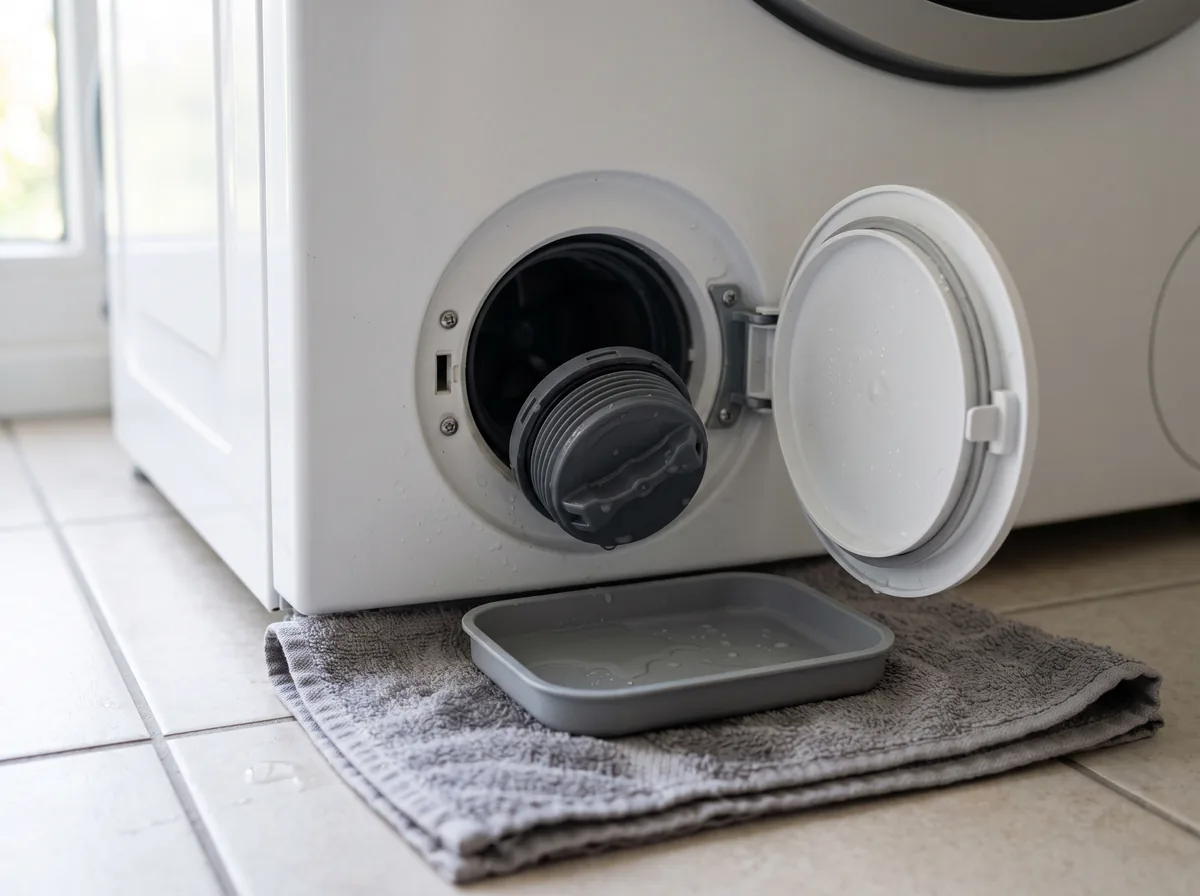
Many front-loaders have a small filter access door at the bottom front. A clogged filter can force water past seals, and the cleanout is a common leak point if the cap is not seated. That much you can inspect. Reaching the pump itself means pulling and opening the machine, which is where a technician should take over.
Pro tip
Lay a sheet of paper towel flat under the front edge of the machine and run a cycle. The wet patch shows you exactly where water is landing, front-left, front-right, or dead center, which helps a technician zero in on the pump, a hose clamp, or the filter without a long teardown.
Leaks from the door seal or dispenser
On a front-loader, water at the door during the wash usually means the rubber door boot has a tear, a trapped object, or buildup keeping it from sealing. On both washer types, overfilling the detergent dispenser or using too much high-suds soap can push water and foam out where it does not belong.
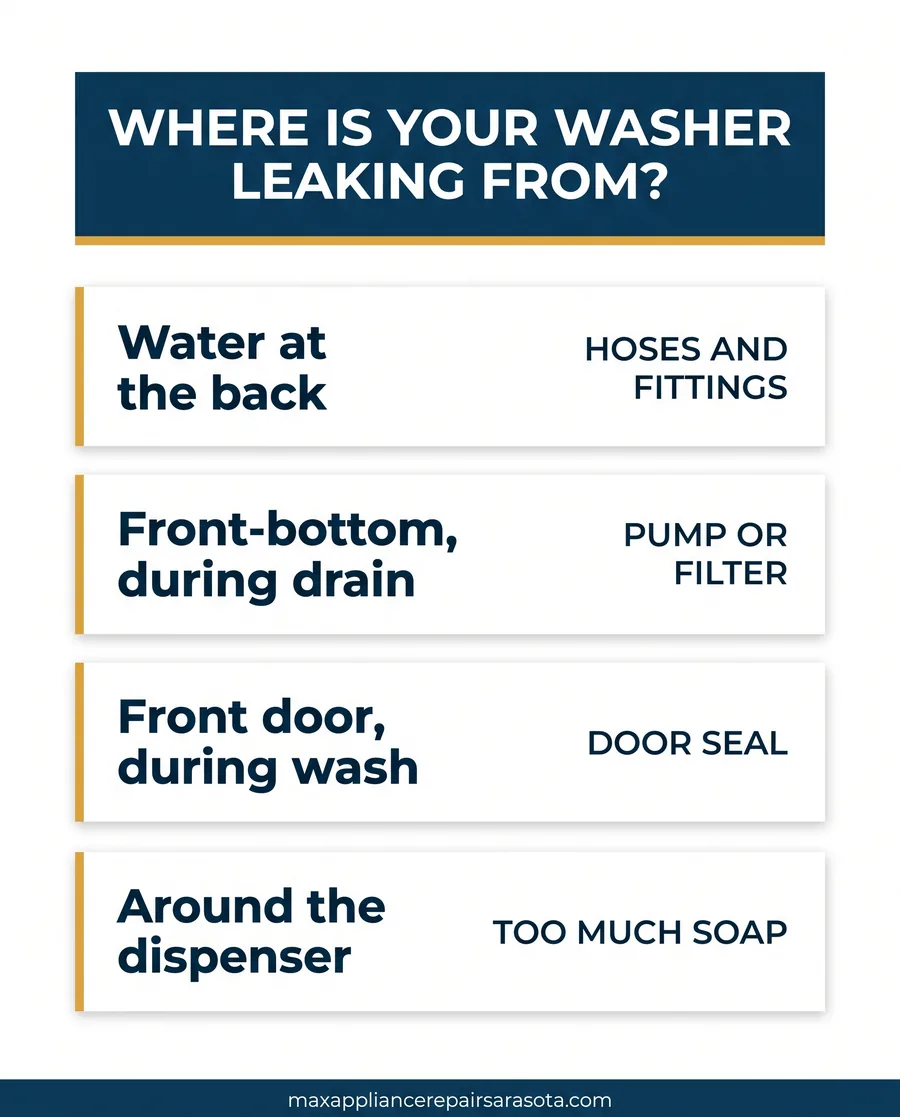
This table maps the leak location to the likely source and what to do next, so you can place your own puddle before deciding whether it is a quick fix or a service call.
| Where the water shows | Likely source | DIY-friendly? | What to check |
|---|---|---|---|
| Back of the machine | Supply hose, drain hose, or household drain | Yes | Tighten fittings, inspect hoses for cracks, check drain flow |
| Front-bottom, during drain | Pump, clamp, or filter | Sometimes | Check the filter cap, then call for the pump |
| Front door, during wash | Torn or dirty door seal | Partly | Clean the gasket, look for tears or objects |
| Around the dispenser | Overfilling dispenser or too much soap | Yes | Use less detergent, clean the drawer |
| No clear source, wide puddle | Cracked tub or internal leak | No | Professional diagnosis required |
What Sarasota residents should check first
Run the checks in order of how likely and how easy they are. Most leaks are found in the first two steps, and you avoid tearing into the machine for something a wrench fixes:
- Fittings first. Hand-tighten the supply-hose couplings and check the rubber washers. This solves a surprising number of drips.
- Hoses and household drain second. Look for cracks, bulges, and rust on supply hoses, and verify the drain pipe isn’t backing up. Replace brittle rubber supply hoses with braided stainless.
- Filter and drain path third. On a front-loader, check that the filter cap is seated and the drain hose is secure in the standpipe.
- Door seal fourth. On a front-loader, clean the gasket and feel for tears or trapped items.
- Detergent last. Cut back the soap and make sure the dispenser is not overfilled.
Red flag: hidden water damage
A slow leak you keep mopping up is still soaking the subfloor and feeding mold underneath. In Florida humidity that happens fast. If you cannot find the source, or the leak returns after tightening hoses, stop running the machine and get it inspected before the damage moves into the floor and walls.
For choosing durable, efficient laundry equipment when a repair no longer makes sense, the ENERGY STAR clothes-washer resource is a reliable, non-commercial reference. When the leak is internal or at the pump, our team covers greater Sarasota and can find and fix it in one visit. Start at our whole-home appliance service in Sarasota to see what we handle.
Download the free quick guide
A one-page guide to find where your washer is leaking and stop the damage before it spreads.
Frequently Asked Questions
A leaking washer is rarely a lost cause. Most puddles trace back to a hose or a fitting you can tighten in minutes, and even a pump or seal is usually a single-part fix. When you cannot find the source or the water keeps coming back, that is the moment to have it looked at before the floor pays for it. Our technicians find and fix washer leaks across Venice, Anna Maria Island, and the greater Sarasota area, down to Nokomis. Reach out for a diagnosis and we will pin down the leak before it spreads.
Need a hand with this one? Max Appliance Repair Sarasota covers Sarasota and Manatee County seven days a week, 7 AM to 10 PM. See washer repair in Sarasota or call (941) 200-1092 and we will book the next opening.
