
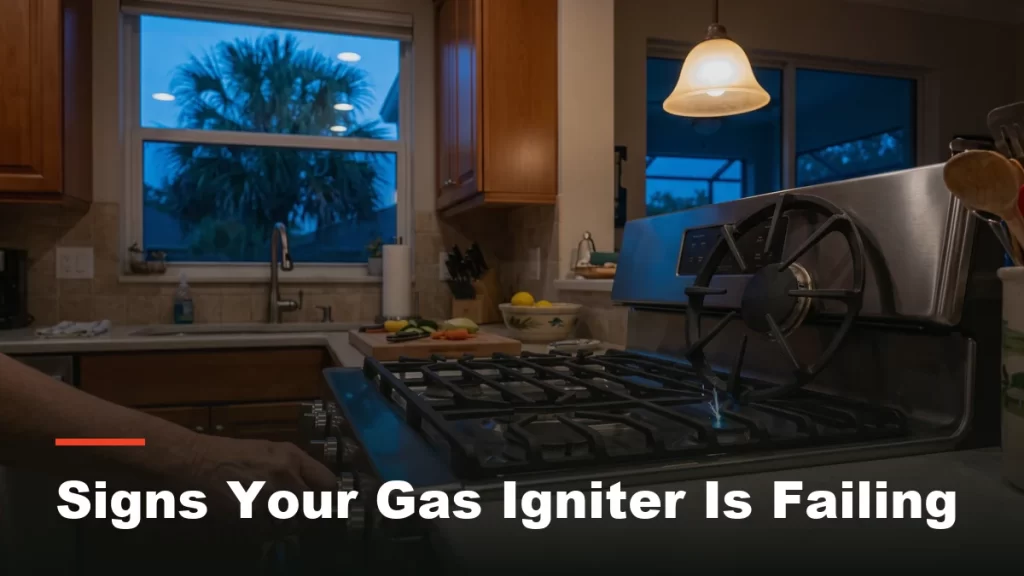
You turn the burner knob on your range to start dinner, but hear nothing except endless clicking. There is no flame and no ignition, just the igniter ticking away every half second until you give up. That clicking-without-lighting pattern is one of the most reliable signs you have a gas stove igniter failing. Knowing what to inspect first can help you resolve a minor issue or recognize when a professional evaluation is necessary.
Igniters are simple components that perform heavy repetitive work. Over time, grease buildup, food spills, and electrical wear cause them to degrade. Below is a breakdown of what these component failures look like, what a technician inspects first, and how to safely troubleshoot your range before making a service call.
Why Gas Stove Igniters Wear Out
Most modern gas ranges use electronic ignition systems rather than a continuous standing pilot light. When you turn a control knob, a spark module sends electric pulses to a small ceramic igniter mounted next to the burner head. The igniter creates a spark to light the gas flow until a sensor detects the flame and signals the module to stop. If components become damaged or misaligned, professional stove repair services can safely restore full functionality.
Because this system activates every time you cook, the igniter tip and control switch experience significant wear. Cooking grease, boil-overs, and moisture buildup accelerate corrosion around the electrode. Recognizing the early symptoms of a gas stove igniter failing prevents further strain on the spark module and electrical components.
Signs Your Gas Stove Igniter Is Failing
Igniter issues present distinct warning signs. If you notice any of the following symptoms, your range requires troubleshooting:
- Continuous clicking on one or more burners without gas ignition
- Delayed clicking that only begins after multiple turns of the knob
- A burner that lights successfully, but the igniter continues clicking afterward
- Sparking that sounds noticeably weaker, slower, or irregular
- A burner that ignites properly when cold but struggles when warm
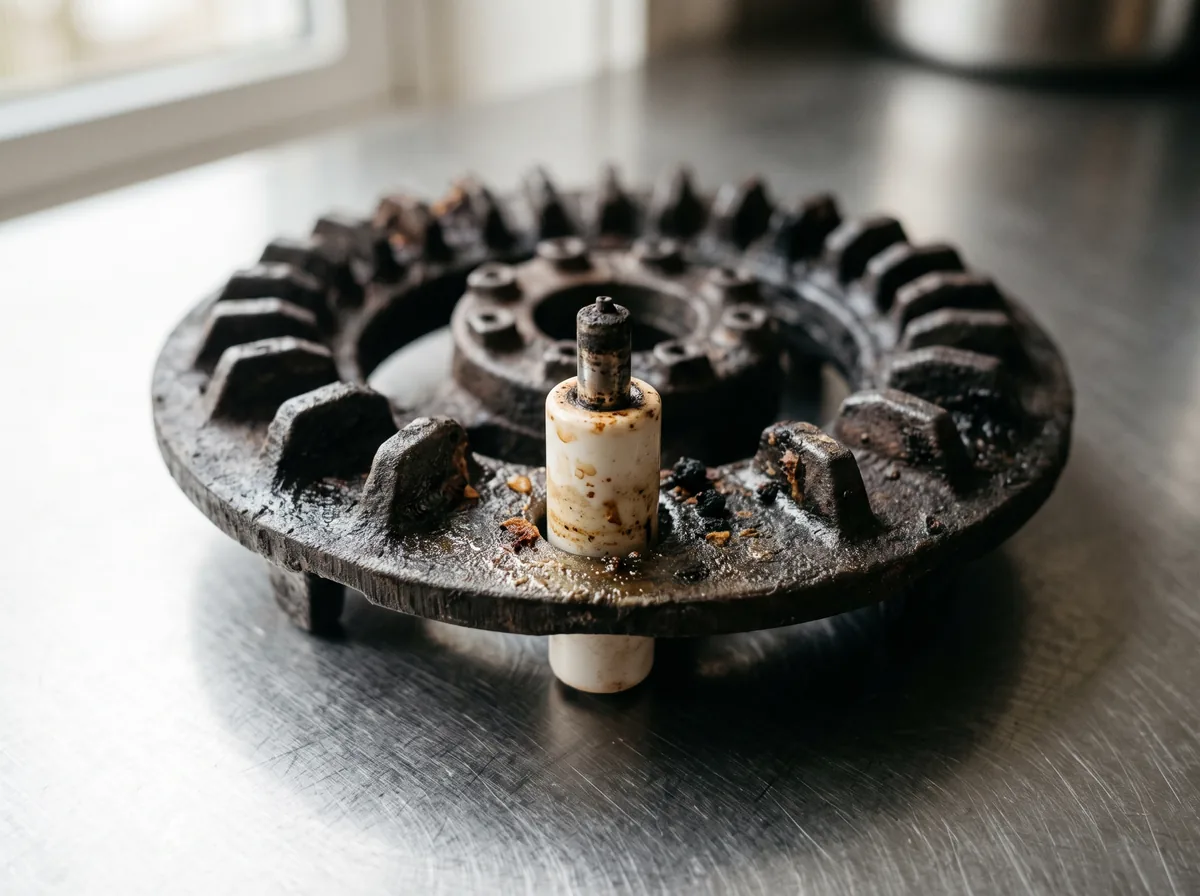
- Visible grease, corrosion, or burnt residue on the ceramic igniter tip
Red Flag Safety Warning
A brief odor of gas immediately after turning a knob is normal during ignition. However, a gas smell that lingers, persists when burners are off, or strengthens is a safety hazard. Leave the area immediately, do not operate electrical switches, and contact your local gas utility or emergency services. Review safety standards from the National Fire Protection Association for guidance on home gas safety.
What a Technician Checks First
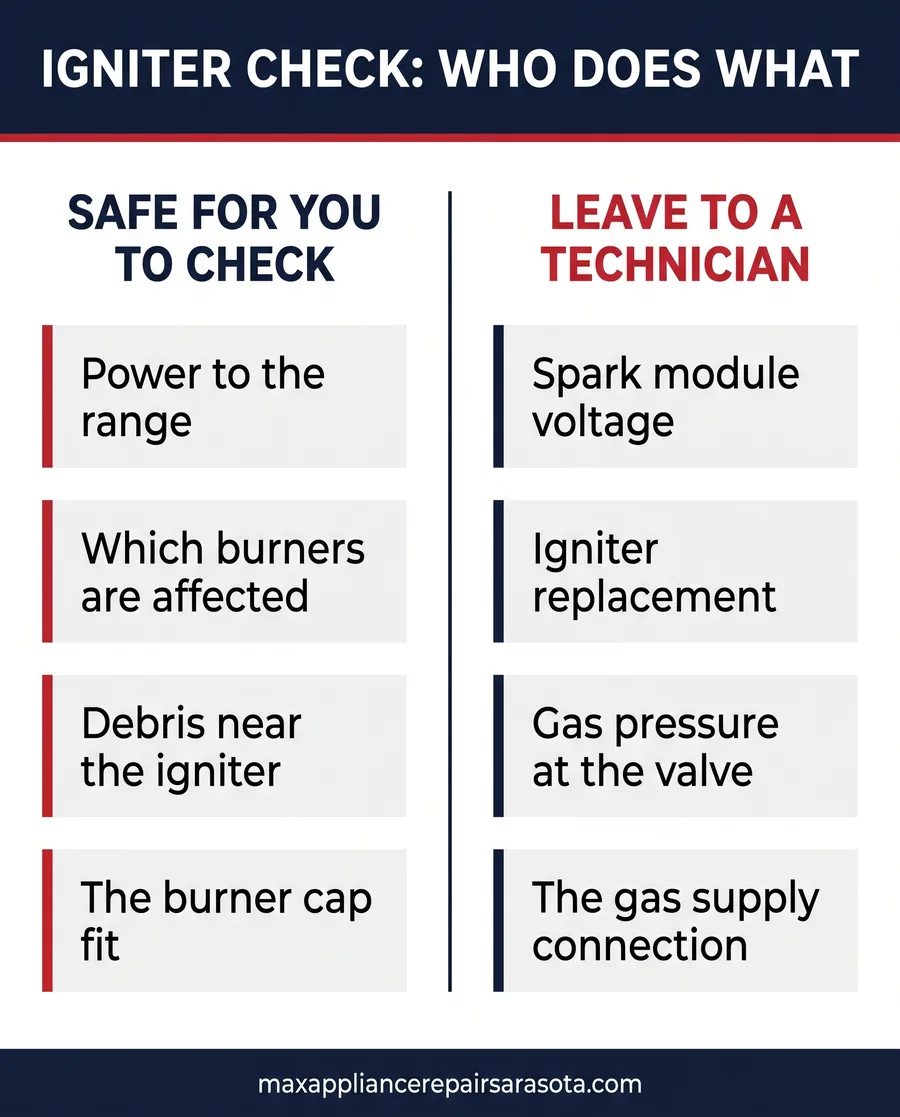
When responding to a gas stove igniter failing, a technician performs a systematic inspection. They examine the ceramic electrode for cracks, corrosion, or severe carbon deposits that interrupt electrical conductivity. Next, they test the spark module and wiring harness with a multimeter to verify voltage output.
The technician also verifies that the burner caps are aligned correctly and that burner ports are free of blockage. These initial diagnostic checks focus on electrical continuity and mechanical placement before inspecting gas valves.
Pro Tip
With the stove turned off and completely cool, use a soft, dry toothbrush to clear food crumbs and debris around the igniter tip. Avoid spraying liquids or liquid cleaner directly onto the electrode, as trapped moisture stops sparks from jumping properly.
When to Call a Professional
If a burner continues clicking after ignition, multiple burners fail simultaneously, or you detect any persistent gas odor, stop using the appliance immediately. Internal wiring, gas valves, pressure regulators, and spark modules require specialized testing tools.
Important Notice
This guide provides general information for troubleshooting range igniters. Repairs involving gas valves, connections, or internal electronics must be performed by a qualified technician. Treat persistent gas odors as emergencies and report them to your gas provider immediately.
Download the Free Quick Guide
A printable summary of warning signs, safe DIY checks, and questions to ask your service technician.
Frequently Asked Questions
What does it mean if my gas stove igniter keeps clicking but the burner will not light?
Continuous clicking usually indicates a worn igniter electrode, a malfunctioning spark module, or clogged burner cap ports preventing gas from reaching the spark. Turn off the burner and perform basic cleaning checks. If gas odors linger, leave immediately and call 911 and their gas utility from a safe location
Can I clean or replace a gas stove igniter myself?
You can safely clean around the igniter electrode using a dry brush while the unit is off and cool. Replacing internal components, spark modules, or working near gas manifold lines requires specialized tools and expertise. Professional service ensures proper installation and safe operation.
Is a clicking gas igniter a fire or gas leak risk?
A brief odor of gas during ignition is expected. However, a persistent gas smell indicates an unlit gas buildup or line leak, which is hazardous. Most clicking issues stem from electrical component wear rather than leaks, but persistent gas smells must always be treated as emergency safety priorities.
How long do gas stove igniters typically last?
Gas stove igniters generally last between 5 to 10 years depending on cooking frequency, maintenance habits, and exposure to moisture or heavy spills. Routine cleaning around burner caps helps extend the component’s operational life.
Should I keep using a burner that lights inconsistently?
It is best to avoid using a burner that fails to light consistently. Repeated ignition delays cause unburnt gas to accumulate, creating potential flashfire risks upon ignition. Have the burner inspected by a repair specialist to restore reliable operation.
Summary & Next Steps
If you suspect your range has a gas stove igniter failing, follow these organized steps:
- Identify affected burners and record whether clicking is continuous, delayed, or absent.
- Perform safe external maintenance while the appliance is completely cool.
- If issues persist or gas odors occur, schedule a professional diagnosis.
Addressing a gas stove igniter failing early helps prevent costly damage to spark modules and ensures safe daily cooking. By starting with basic surface cleaning and checking burner alignment, you can resolve minor glitches yourself. However, if endless clicking or ignition delays persist, relying on expert diagnostic care is the best path forward. Whether you need assistance with standard range maintenance or specialized repairs, our team is ready to help. If your range continues clicking or failing to ignite, contact a technician today to restore your stove to full performance.
